
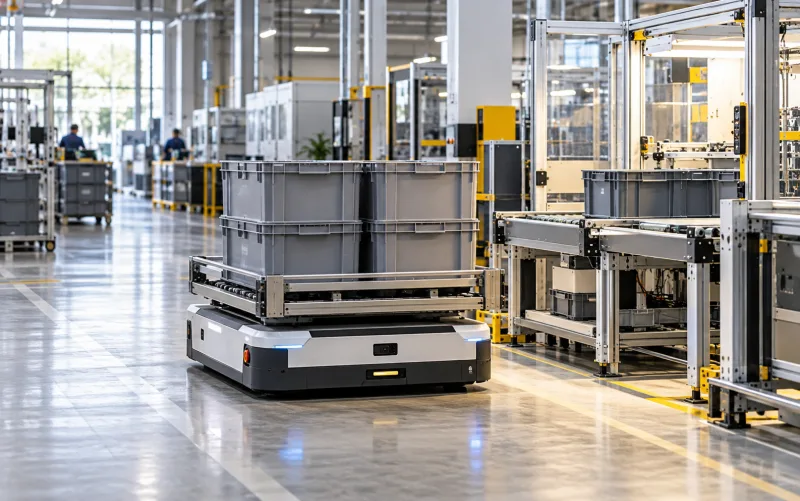
 AI-generated setting
Production replenishment
Deliver components or containers from buffers to workstations without blocking staff work areas.
Design material movement between workstations around defined loads, handovers and queues, with suitable attachments, charging and host-system interfaces.
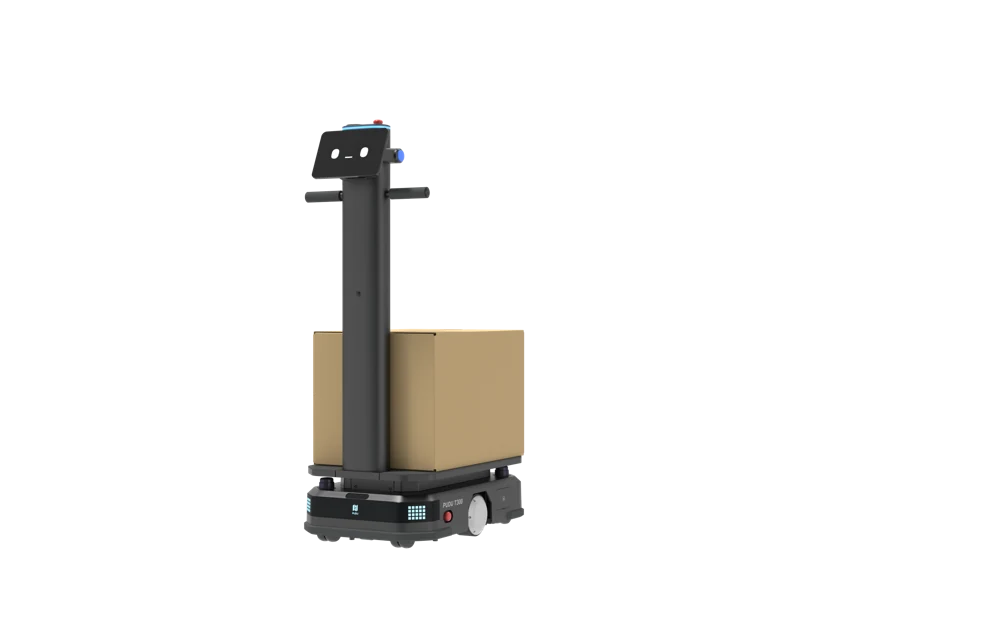
Define the duty cycle and handover points before choosing equipment. The robot works with your team and the site’s existing processes.
AI-generated settingDeliver components or containers from buffers to workstations without blocking staff work areas.
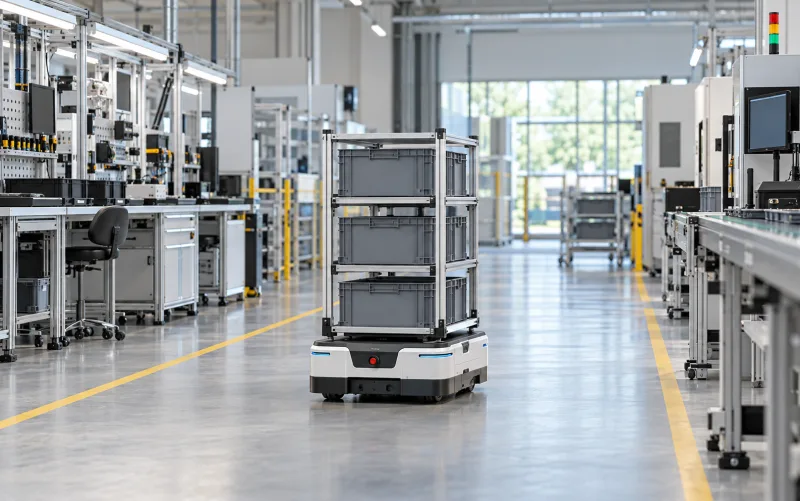 AI-generated setting
Coordinate assembly, inspection and packing handovers with destination-readiness states.
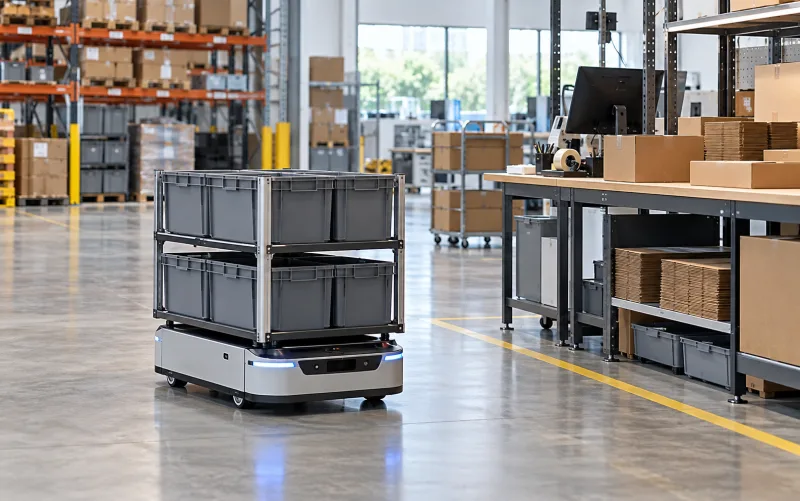 AI-generated setting
Match shelves/carts to totes and tasks, distinguishing box transport from pallet lifting that needs other equipment.
Model references support assessment, rather than establish stock or a quotation. Confirm the variant, latest documentation and support scope before specification.
A material-transport platform configured with task-specific shelves or attachments, distinct from the Lifting variant.
Manufacturer-page figures checked 31 Oct 2026, not site measurements. Confirm the variant, latest documentation and operating conditions in the proposal.
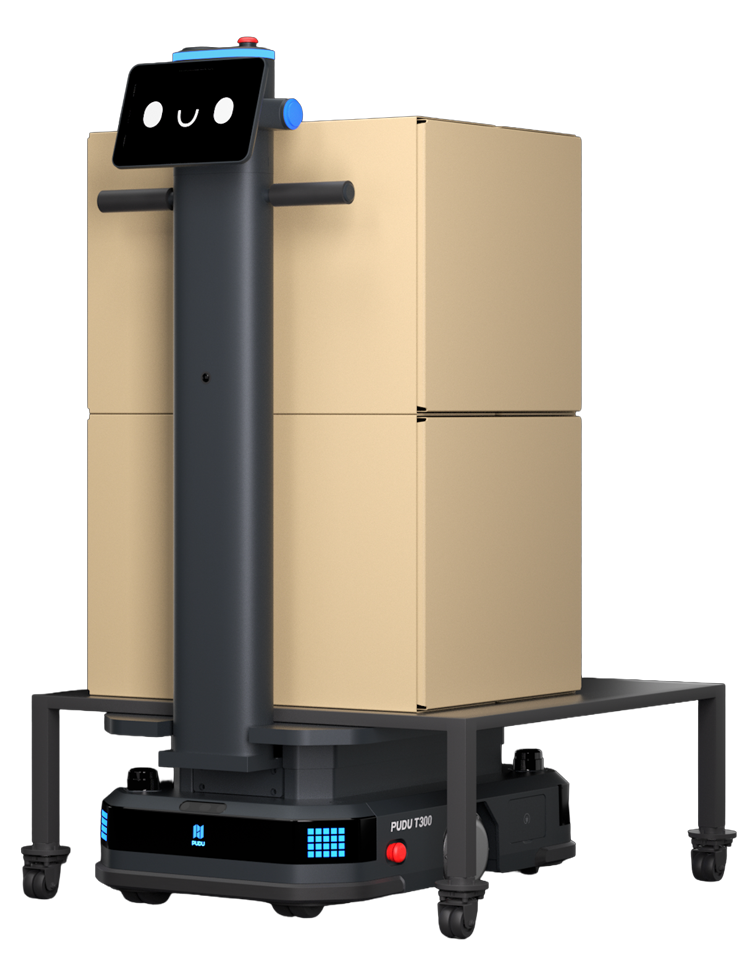
A lifting configuration for compatible handover fixtures. Validate lift points and load dimensions with the selected equipment supplier.
Manufacturer-page figures checked 31 Oct 2026, not site measurements. Confirm the variant, latest documentation and operating conditions in the proposal.
Select a stage to see how preparation, robot movement and handover fit together. This is an operating concept, not a surveyed map or a capability shared by every model.
Route concept · stops, protected areas and charging are designed around the selected model and site.
An operator or host system releases a job, checks destination readiness and prepares the load on an approved attachment.
Equipment is one part of the system. Handover points, operating responsibilities and site conditions must be prepared together.
Check payload including attachments, centre of gravity, overhang and restraint. Match shelves, carts or lifting points to the selected variant.
Survey junctions, mixed traffic, production handovers and buffers. Define priorities and task stopping before bottlenecks develop.
Specify WMS/ERP/MES data, API ownership, job states and errors. Agree the workflow when host connectivity is unavailable.
A project delivery sequence, not a wiring or machine-configuration manual. Installation and risk assessment require the applicable equipment instructions and qualified personnel.
Agree loads, endpoints, operating windows and responsibilities. Define task-cycle and exception criteria before selecting equipment.
Record total loads, cycle demand, station interfaces and bottlenecks; assess networking and charging.
Specify handovers, waiting points, charging, exclusion zones and job calls. Scope doors, lifts, networking and software interfaces explicitly.
Prepare floors, aisles, power and networking for the selected equipment. Qualified installers handle site services; then map the site, assign permissions and configure stations.
Trial real loads, handovers, intersections, network loss, full destinations and recharge before scaling the fleet.
Train task start/stop, loading, charging and recovery using the equipment instructions. Hand over layouts, routes, settings, trial results and maintenance arrangements.
Define equipment, attachments, software, interfaces, training, maintenance and support in the proposal. Pricing and contract terms depend on the project.
Compare a people-led workflow with a team supported by robots, and estimate simple payback. Adjust the inputs to your work scope and quotation.
Starting figures are an illustrative cleaning scenario, not selling prices, rental rates or guaranteed returns. Compare equivalent coverage, duty cycles and service quality.
Estimated simple payback
1.9 years
The point where cumulative costs meet. Beyond it, the difference is estimated cost savings.
| Year | People-led | Team + robot |
|---|---|---|
| 0 | 0 | 340,000 |
| 1 | 300,000 | 460,000 |
| 2 | 600,000 | 580,000 |
| 3 | 900,000 | 700,000 |
| 4 | 1,200,000 | 820,000 |
| 5 | 1,500,000 | 940,000 |
Monthly difference = current labor − (remaining labor + operation + rent when renting). Payback in years = deployment plus purchase, if applicable, ÷ monthly difference ÷ 12. Payback requires a positive monthly difference.
Count only genuinely avoidable labor spending. Redeploying staff does not automatically reduce payroll. These are cost savings, not accounting profit. Tax, financing, inflation, resale and the time value of money are excluded. Monthly costs are assumed constant over the selected period.
These AMRs transport materials on platforms/attachments; forklift robots handle pallets with forks. Select actual lift and handover capabilities for the task.
Agree API data, access, ownership and recovery. An available interface does not imply every host system connects without additional work.
Size from travel, loading waits, junctions and charging. Trial a route before fleet scheduling; maximum speed is not task throughput.
Reviewed 31 October 2026. Details can differ by variant, region and configuration; reconfirm them in the project proposal.