Mostly daytime loads, or do you need stored energy for later? That answer shapes the system.
On-grid (grid-tied)
Modules + inverter + building switchboard
PV modulesDC power from sunlight
InverterConverts DC to AC
Building switchboardSupplies on-site loads first
MonitoringGeneration and status
A grid-tied system without batteries is not a backup supply during an outage.
Consider when
Factories, offices and warehouses with heavy daytime use.
Check the match
Roof condition and structure, shading, and a confirmed module–inverter combination.
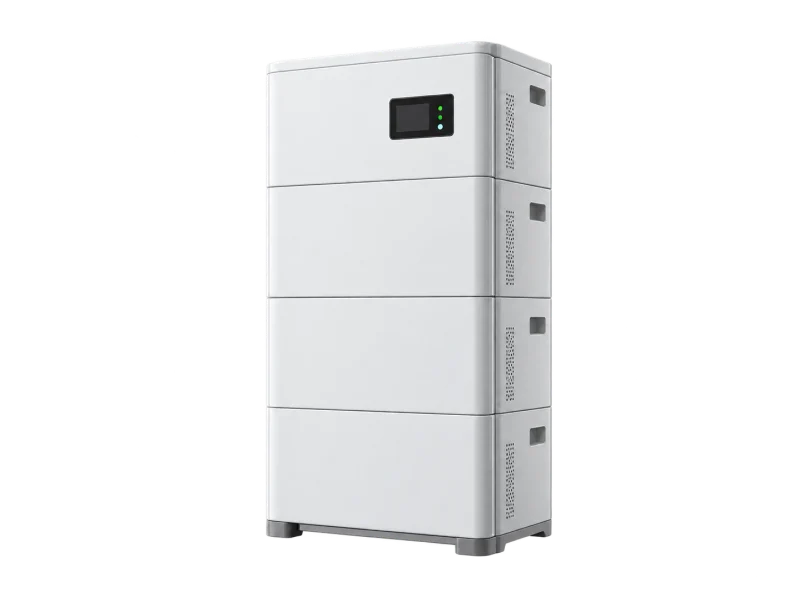
Hybrid with battery
Hybrid inverter + battery
PV modulesDC power from sunlight
Hybrid inverterManages loads, battery and grid
BatteryStores energy for later
MonitoringGeneration, use and battery state
Backup needs its own design: which circuits, battery size and protection.
Consider when
Sites that want stored energy or backup for selected critical circuits.
Check the match
Which circuits are backed up, battery capacity and the batteries that inverter supports.
AI-generated equipment concepts, not photographs of specified models.
System size, yield and payback are assessed per project; there is no standard figure.
What a solar system is made of
Every part must match electrically and structurally, from module to monitoring.
01
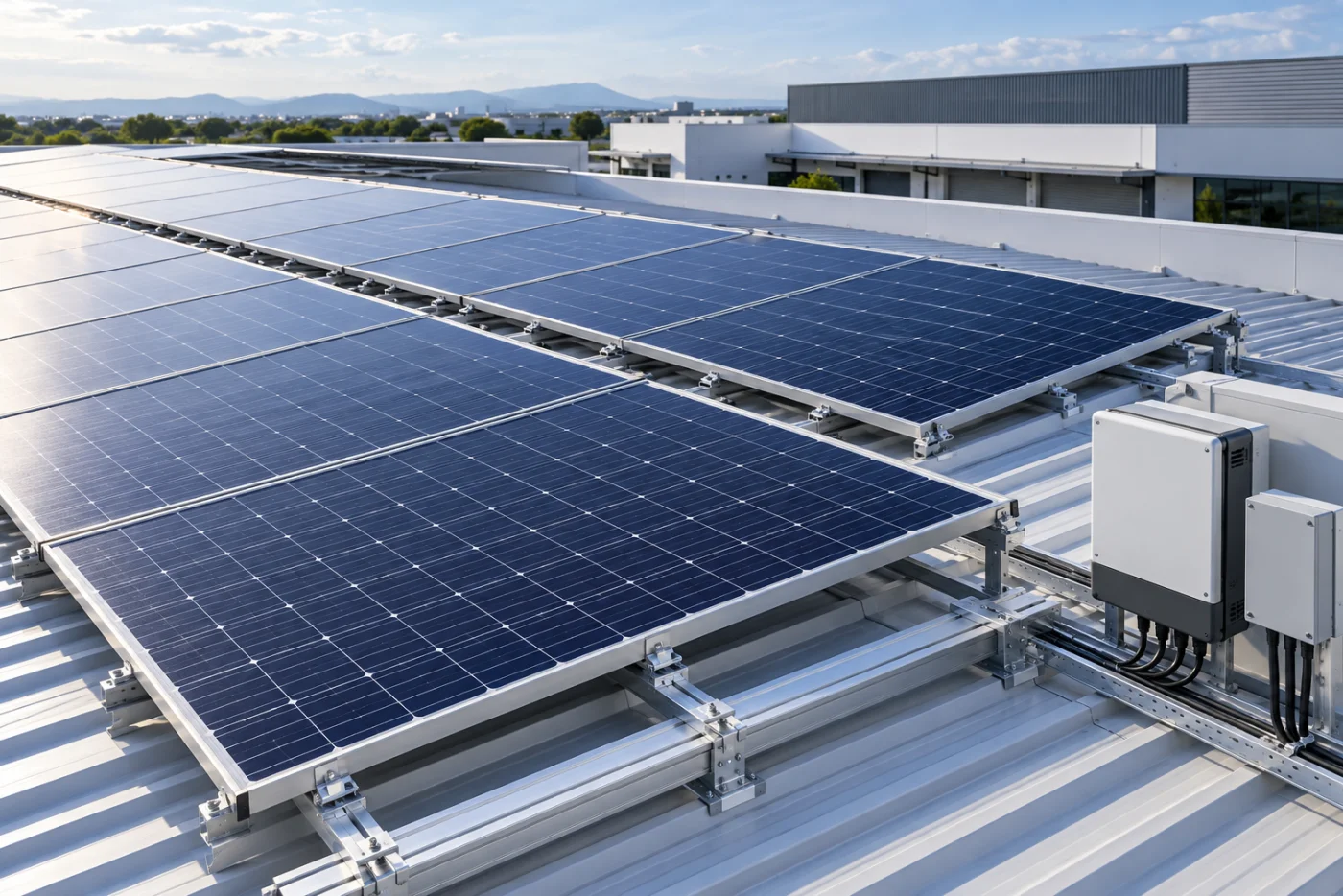
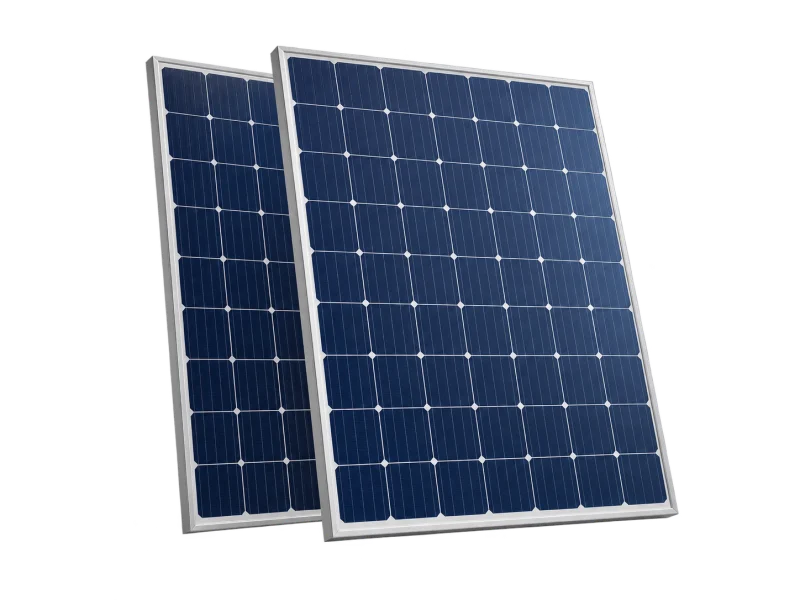
AI-generated concept
PV modules
LONGi PV modules
Module model chosen for roof space and usage, installed to the manual for the selected module family.
02
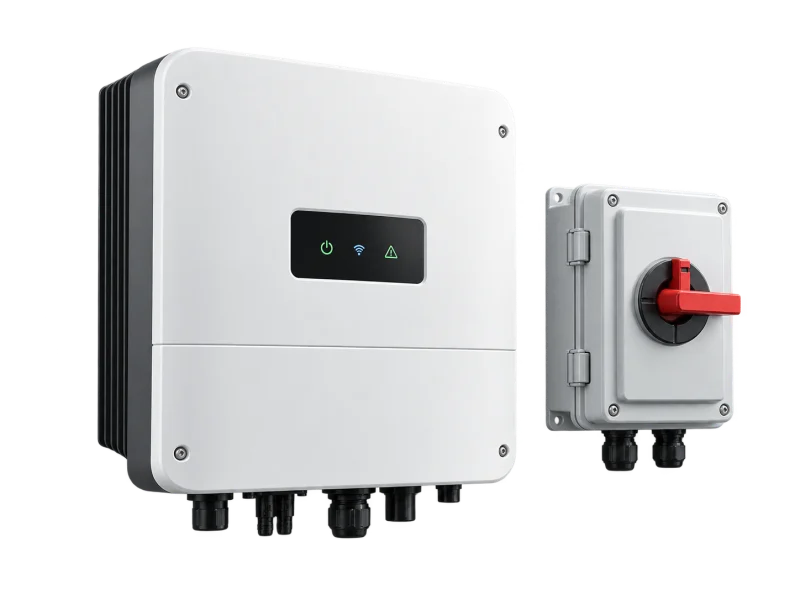
AI-generated concept
Inverter
Inverters: the heart of the system
Converts DC to AC. The manufacturer advises confirming each module–inverter pairing rather than assuming compatibility.
03
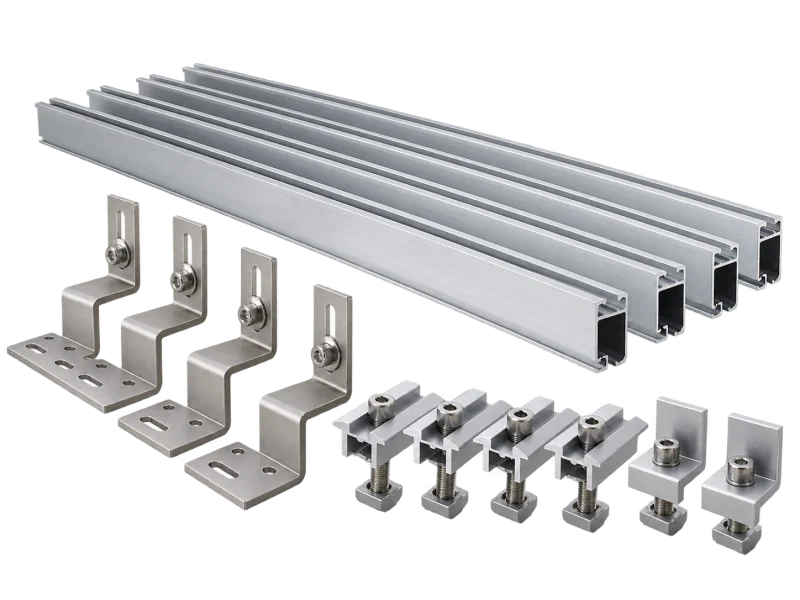
AI-generated concept
Mounting
Mounting for your roof type
Racking matched to metal-sheet, concrete or carport roofs, with structure and waterproofing checked.
04
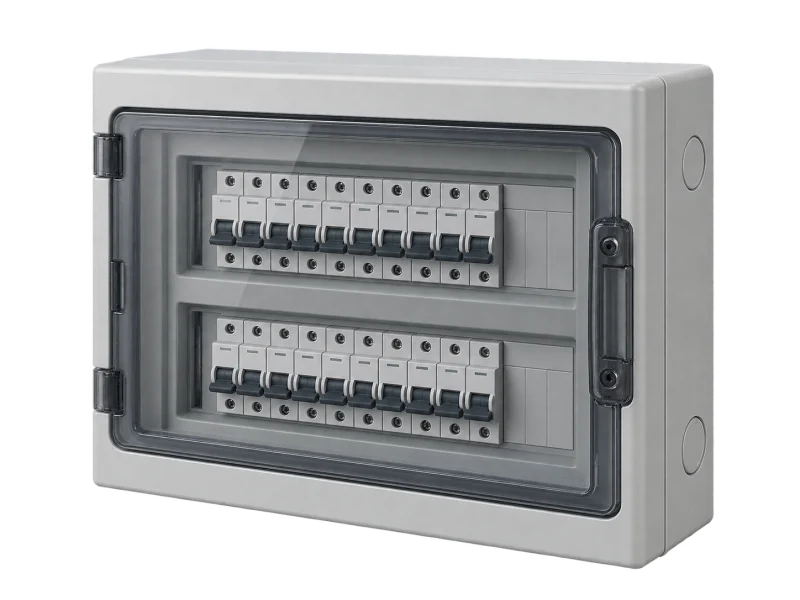
AI-generated concept
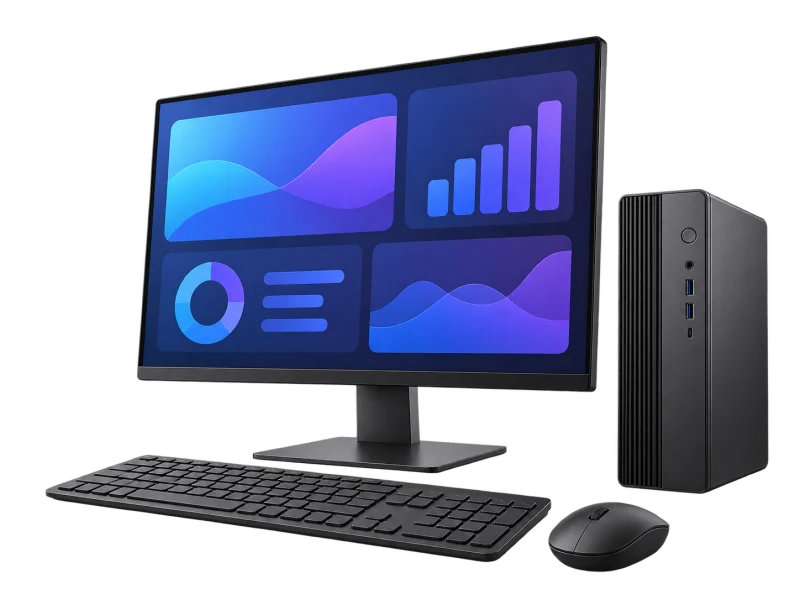
Monitoring
Generation monitoring
Generation and equipment status data, so your team can see when output drops.
Manufacturer documents are technical context; models, warranty and utility connection terms are confirmed in each proposal.
Choose for the roof and site
Each roof needs different racking, structural review and cable routes.
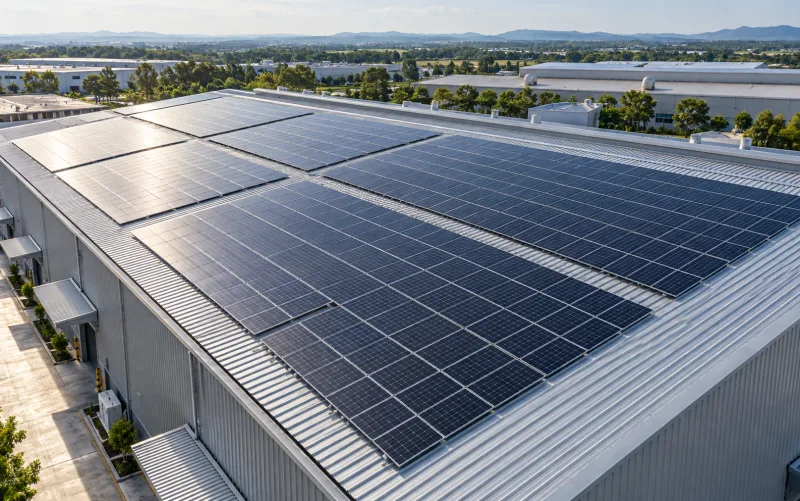
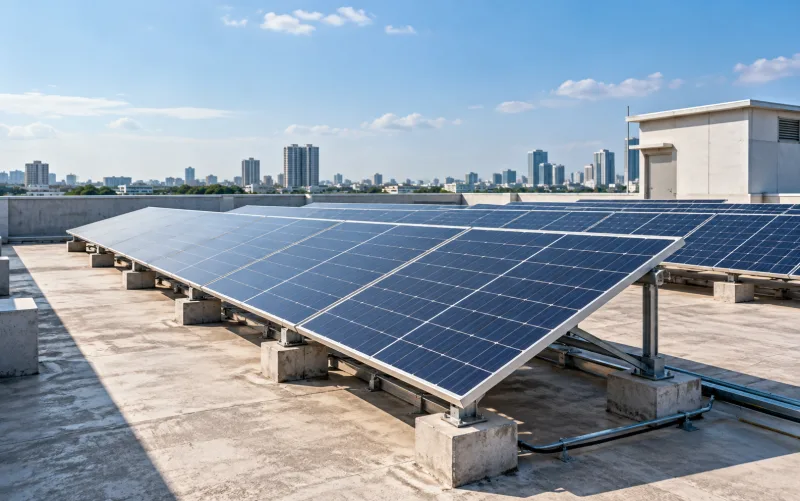
AI-generated setting
Metal-sheet roofs
Factories and warehouses
Check purlins and sheet condition
AI-generated setting
Concrete roofs
Offices and commercial buildings
Protect the roof waterproofing
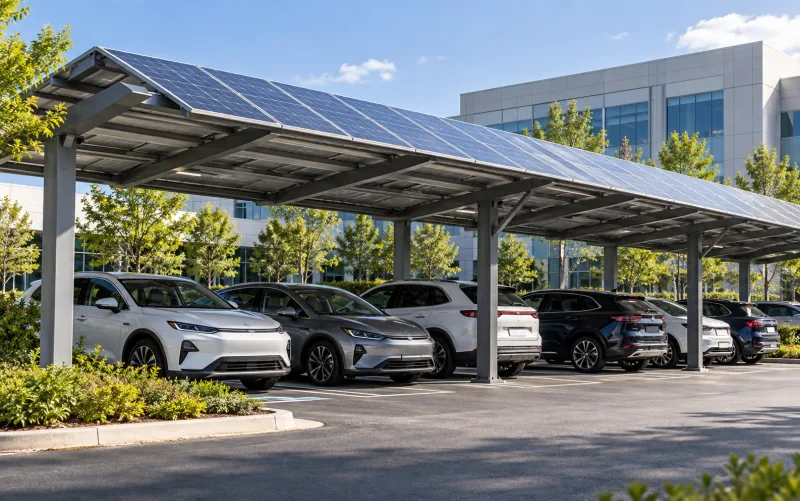
AI-generated setting
Solar carports
Car parks that need shade
Needs a new structure design
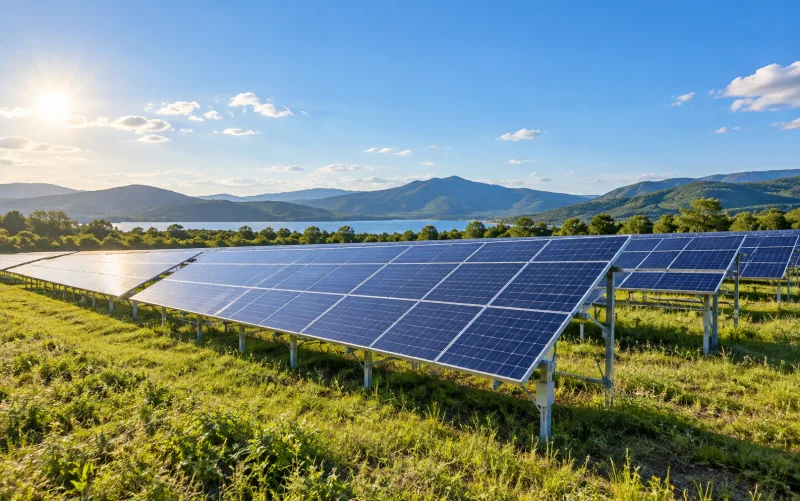
AI-generated setting
Ground mount
Open land
Foundations, drainage and fencing
What keeps output high and the system safe
Shading assessment
Shade from buildings, trees or rooftop plant reduces output, so it is assessed before layout.
Performance monitoring
Continuous data shows soiled modules, faults or unusual output early.
Electrical protection
Protection devices and earthing are designed by qualified engineers to the project requirements.
LONGi modules. Everything else chosen for compatibility.
Modules come from LONGi; inverters and batteries are chosen to match the modules and your usage plan.
Customer favorite
LONGi
Best for
Factory roofs, commercial buildings and carports
Why choose it
A module manufacturer with installation manuals and support documents per module family
Before choosing
Use the manual and warranty documents for the exact model selected
Inverters and batteries
Best for
Every project, by on-grid or hybrid design
Why choose it
Chosen for module compatibility, system size and the monitoring you need
Before choosing
Confirm the pairing with the manufacturers before finalising models
This is DPI design guidance, not a quality or price ranking.
Why buy your solar system from DPI
One team from survey, design and supply to installation, testing and after-sales support.
01
Authorized distributor and certified partner
Equipment sourced through authorized channels, with model advice and the manufacturer’s warranty terms.
02
Designed from a site survey
Roof condition, shading, structure and daytime usage are assessed before sizing.
03
The whole system, not just devices
Modules, inverter, mounting, protection, monitoring and the building connection designed as one.
04
Honest brand advice
LONGi modules, with inverters chosen for confirmed compatibility.
05
Tested before handover
Commissioning checks, monitoring access, electrical drawings and equipment records at handover.
06
Ongoing support nationwide
A Pathum Thani team providing maintenance and technical support across Thailand.
Book a site surveyModels, terms and warranty are specified in each project quotation.
From sunlight to building energy
Separate the energy path from monitoring data and design the connection for the building.
Solar 18.2 kWSurplus 5.9 kW
Factory roof · 20 kWp (example)10:43
Midday: peak generation
On-grid: cuts daytime grid purchases, but stops during an outage
PV modulesDC power from sunlight
01
InverterConverts DC to AC
02
Building switchboardSupplies on-site loads first
03
MonitoringGeneration and status
04
Midday: use it on site
Solar supplies the building first; any surplus is exported or limited, as the site’s grid-connection approval allows.
Scene, timing and power values are an illustrative model, not a yield or savings estimate. Real results depend on system size, orientation, tilt, shading, weather, consumption and the utility’s connection terms.
AI-generated equipment concepts, not photographs of specified models.
Concept only, not an electrical wiring or installation guide. Qualified professionals must review the project design and requirements.
Before you specify
Provide roof details, usable area, shading information and a structural assessment for the proposed installation.
Share electricity bills and usage times, and distinguish energy-offset goals from outage-backup requirements.
Check module and inverter models, circuit configuration and protection equipment against the selected product documentation.
Testing & handover
Agree commissioning checks, equipment records, electrical drawings, monitoring access and maintenance guidance before handover.
Equipment details, compatibility and scope must be confirmed for each project.
Manufacturer references
LONGi module installation manual — DGBG V2.0
LONGi support and compatibility guidance
Before you decide
Is roof area enough to size a system?
No. Consider shading, structure, electricity use and electrical-system constraints together. Actual generation depends on the site and design.
Will LONGi modules work with any inverter?
Confirm the exact models and electrical ratings first. A module brand alone does not establish compatibility of the complete system.
From survey to support
The same six stages on every project, so the system is ready on handover day.

 AI-generated concept
 AI-generated setting
 AI-generated setting
 AI-generated setting
 AI-generated setting