
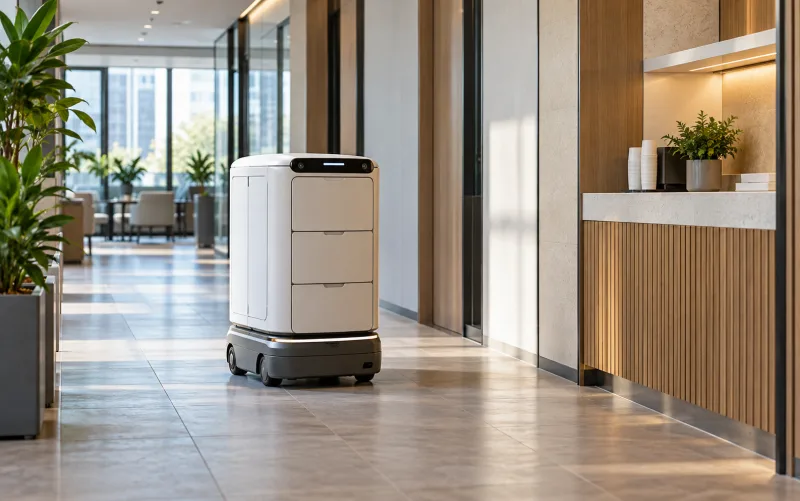
 AI-generated setting
Offices and service departments
Schedule equipment, documents or parcels between designated collection points with recipient checks.
Plan deliveries between departments, service points and recipients, including loading, collection confirmation and return to service.
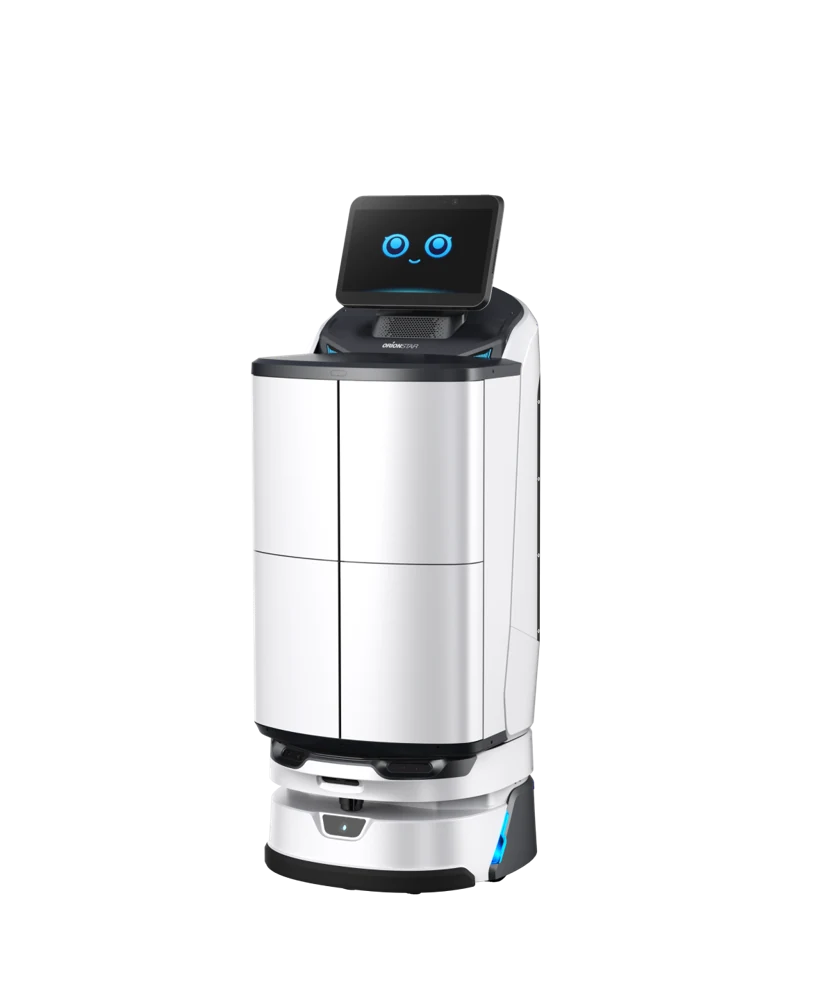
Define the duty cycle and handover points before choosing equipment. The robot works with your team and the site’s existing processes.
AI-generated settingSchedule equipment, documents or parcels between designated collection points with recipient checks.
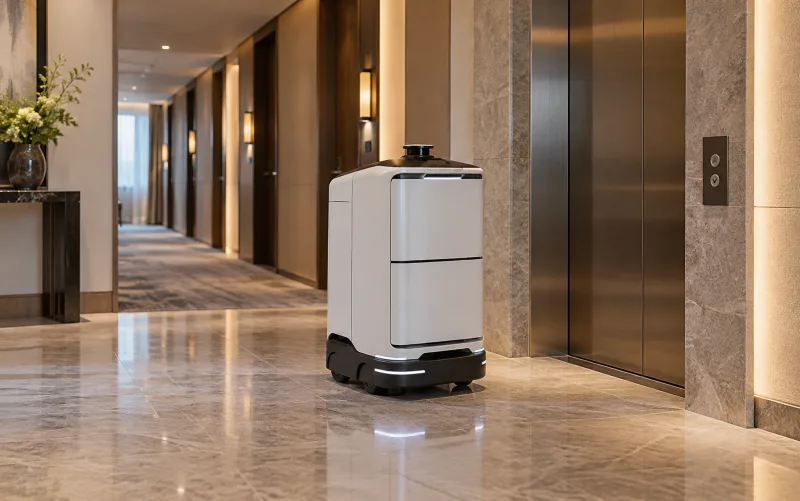 AI-generated setting
Plan preparation-to-guest collection, assessing lift and door crossings as separate integration work.
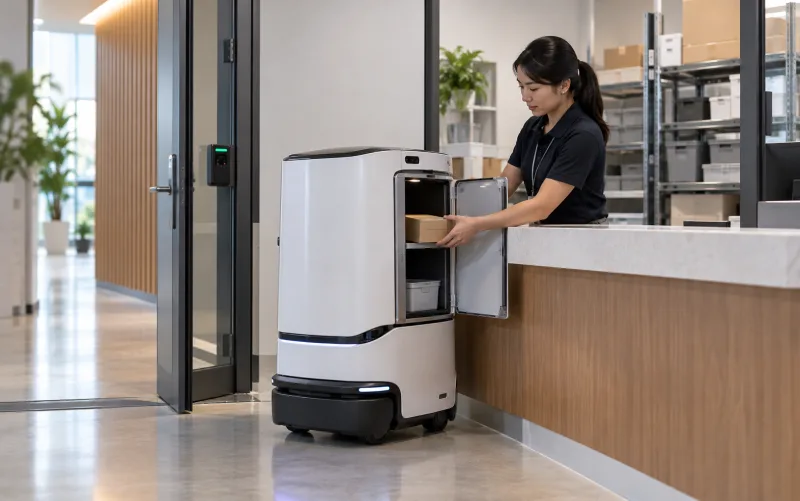 AI-generated setting
Assess enclosed compartments for controlled collection. Medical items, temperature control and contamination require the organisation’s separate requirements.
Model references support assessment, rather than establish stock or a quotation. Confirm the variant, latest documentation and support scope before specification.
An enclosed delivery configuration with passcode collection for tasks requiring controlled access to the carried items.
Manufacturer-page figures checked 31 Oct 2026, not site measurements. Confirm the variant, latest documentation and operating conditions in the proposal.
Select a stage to see how preparation, robot movement and handover fit together. This is an operating concept, not a surveyed map or a capability shared by every model.
Route concept · stops, protected areas and charging are designed around the selected model and site.
Staff check items, secure containers, choose a destination and configure supported collection access.
Equipment is one part of the system. Handover points, operating responsibilities and site conditions must be prepared together.
Measure packages and containers, check per-shelf weight and restraint, and separate jobs. Assign loading, collection and item-check responsibilities.
Survey aisles, turning points, fire doors and private areas. Lift/door crossings require interface assessment and testing before accepting a route.
Check network coverage, accounts and a charging location clear of circulation. Plan charging windows and fallback delivery when the robot is unavailable.
A project delivery sequence, not a wiring or machine-configuration manual. Installation and risk assessment require the applicable equipment instructions and qualified personnel.
Agree loads, endpoints, operating windows and responsibilities. Define task-cycle and exception criteria before selecting equipment.
Record real rounds, peak periods, container types, access checks and charging location.
Specify handovers, waiting points, charging, exclusion zones and job calls. Scope doors, lifts, networking and software interfaces explicitly.
Prepare floors, aisles, power and networking for the selected equipment. Qualified installers handle site services; then map the site, assign permissions and configure stations.
Trial loading, travel, access, failed collection and return, including any scoped door/lift crossings.
Train task start/stop, loading, charging and recovery using the equipment instructions. Hand over layouts, routes, settings, trial results and maintenance arrangements.
Define equipment, attachments, software, interfaces, training, maintenance and support in the proposal. Pricing and contract terms depend on the project.
Compare a people-led workflow with a team supported by robots, and estimate simple payback. Adjust the inputs to your work scope and quotation.
Starting figures are an illustrative cleaning scenario, not selling prices, rental rates or guaranteed returns. Compare equivalent coverage, duty cycles and service quality.
Estimated simple payback
1.9 years
The point where cumulative costs meet. Beyond it, the difference is estimated cost savings.
| Year | People-led | Team + robot |
|---|---|---|
| 0 | 0 | 340,000 |
| 1 | 300,000 | 460,000 |
| 2 | 600,000 | 580,000 |
| 3 | 900,000 | 700,000 |
| 4 | 1,200,000 | 820,000 |
| 5 | 1,500,000 | 940,000 |
Monthly difference = current labor − (remaining labor + operation + rent when renting). Payback in years = deployment plus purchase, if applicable, ÷ monthly difference ÷ 12. Payback requires a positive monthly difference.
Count only genuinely avoidable labor spending. Redeploying staff does not automatically reduce payroll. These are cost savings, not accounting profit. Tax, financing, inflation, resale and the time value of money are excluded. Monthly costs are assumed constant over the selected period.
Assess lift interfaces, control permissions, communications and failed-call recovery before integration and testing.
The robot supports repeated travel; preparation, item checking, collection and exceptions still need assigned staff.
Assess enclosed compartments for controlled access or item separation, and open trays for staff-managed loading/unloading. Trial the actual workflow.
Reviewed 31 October 2026. Details can differ by variant, region and configuration; reconfirm them in the project proposal.