
High volume, low speed
Blades several metres long turn at only 55–80 rpm yet push thousands of cubic metres of air a minute.
Keep factories, warehouses and tall halls comfortable with YUSHI big fans of 3.6–7.3 m, evaporative coolers and ventilation, with structural survey and engineered installation.
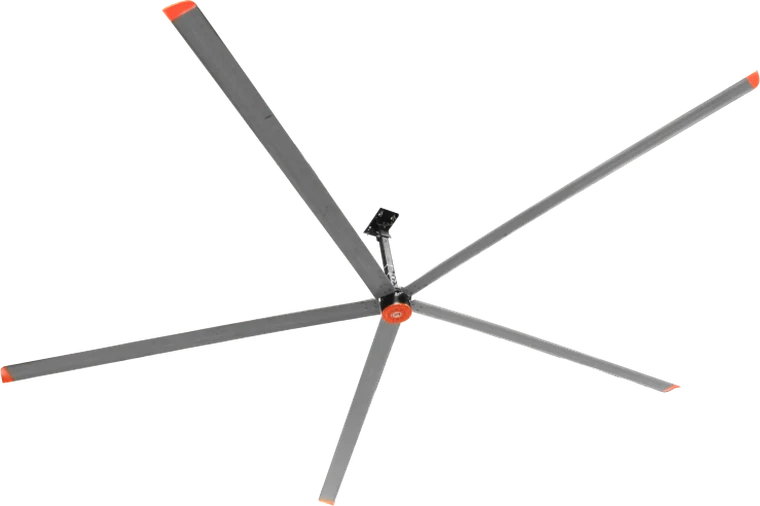
HVLS stands for High-Volume, Low-Speed: blades several metres across turn slowly but move a large volume of air through tall, wide buildings.
Blades several metres long turn at only 55–80 rpm yet push thousands of cubic metres of air a minute.
A wide column of air reaches the floor and spreads across the working area, so people feel steady air movement.
Hot air trapped under the roof is circulated and mixed with the air below. It moves air rather than chilling it like air conditioning.
Switch the fan on and off, change speed and pick a model to see blade size, reach, specifications and a rough fan count for your area.
≈ 3 × XY-PA61 · about 1.89 kW
Rough estimate from the manufacturer’s stated coverage. The real number and layout depend on height, obstructions and airflow paths after a site survey.
Two routes from one manufacturer: AC for the widest spaces, DC where quiet running and low power matter.
Direct drive with no shaft, gear or gearbox
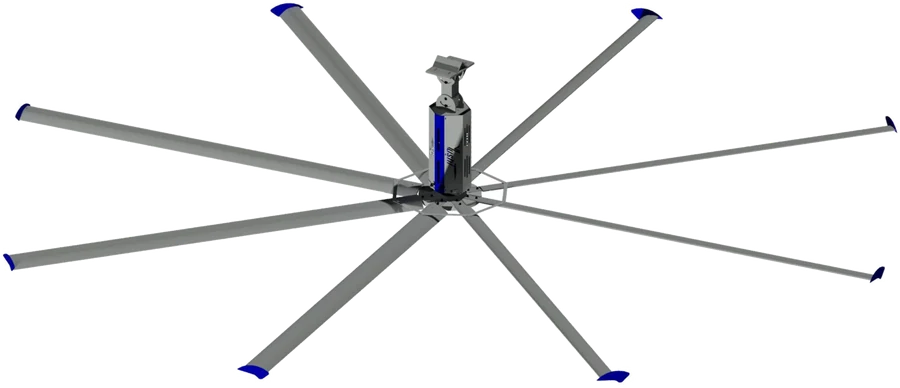
Geared 2 HP (1.5 kW) motor on AC 380 V
The manufacturer states one big fan can replace 40–50 small 170–350 W fans while using over four times less electricity; results depend on the building and use. Manufacturer data
Tall ceilings, wide floors and spaces that are not fully air-conditioned.
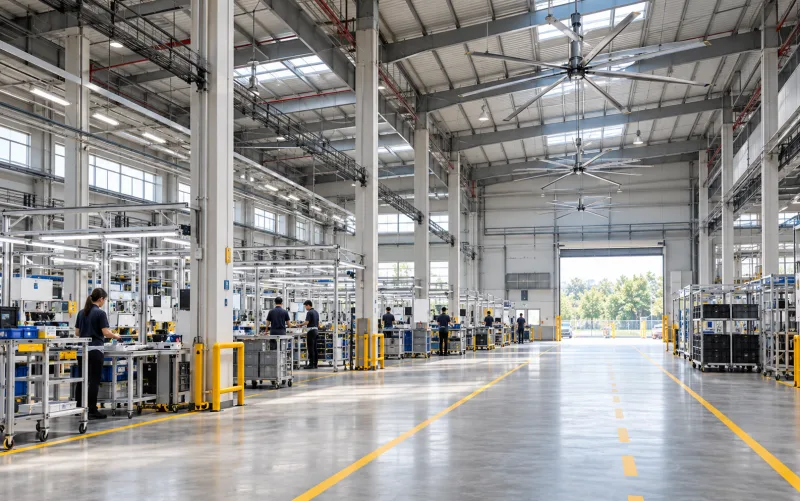 AI-generated setting
 AI-generated setting
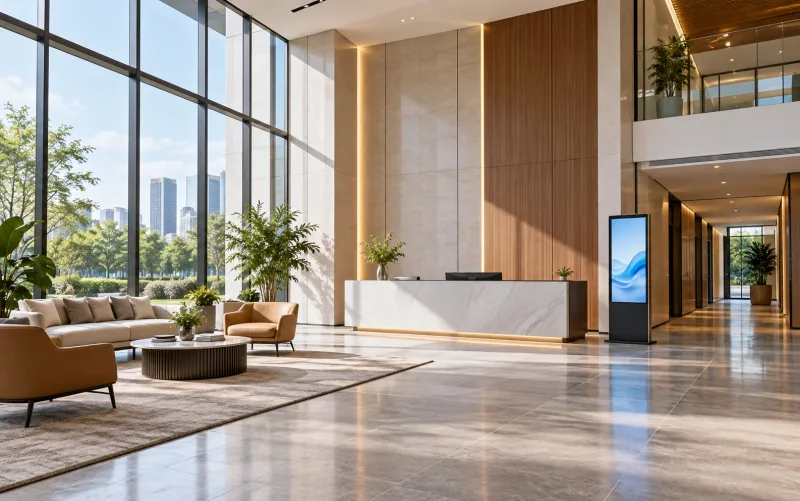 AI-generated setting
 AI-generated setting
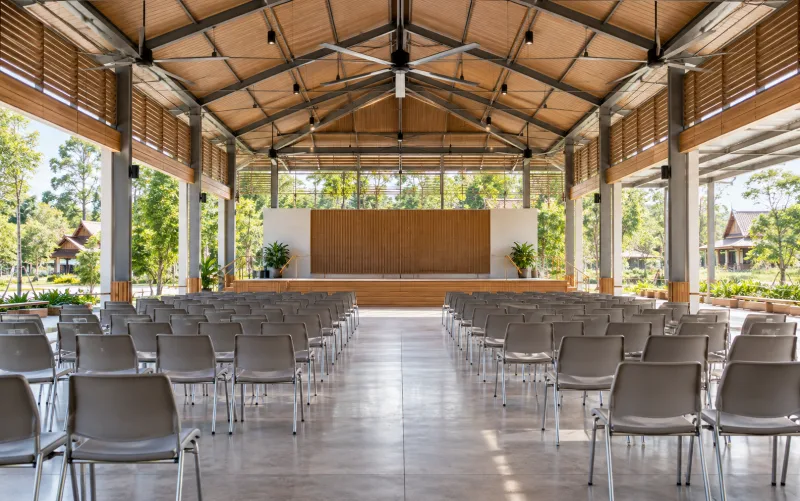 AI-generated setting
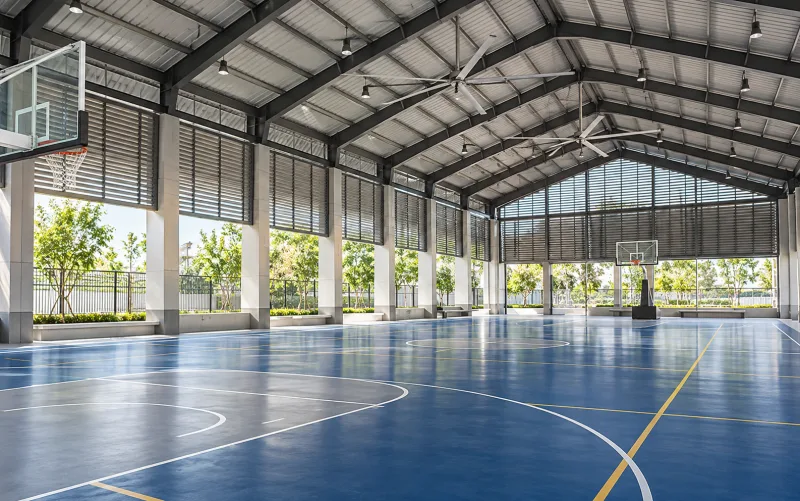 AI-generated setting
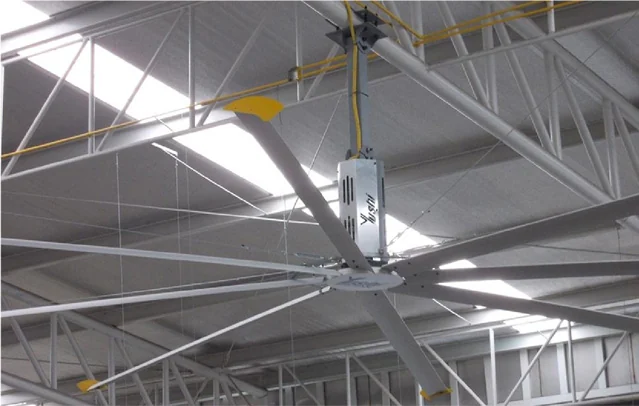
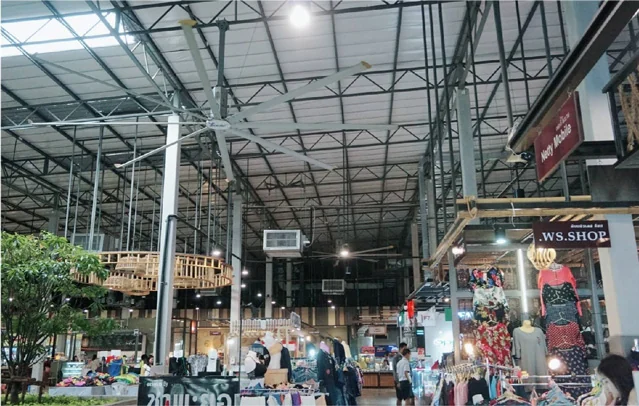
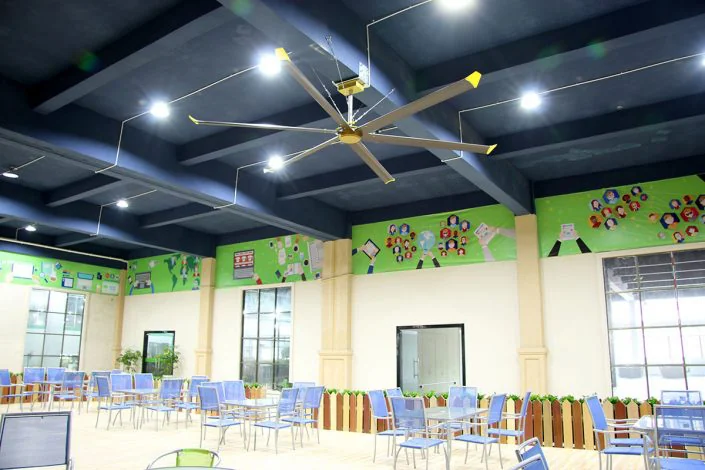
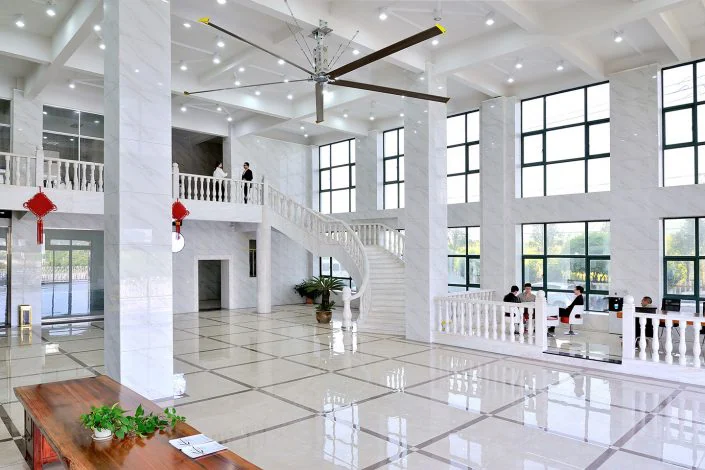
Installation photos from YUSHI (the manufacturer’s references, not DPI projects)
A big fan is heavy equipment hung over people at work, so structure and safety planning come first.
A structural engineer checks mounts and load (AC models weigh 136–160 kg). The manufacturer installs with engineers trained in safety standards.
Set distances from lights, sprinkler heads, overhead cranes and high racking so airflow is not blocked and lights do not flicker through the blades.
AC models need 380 V; confirm the DC supply, control panel and speed scheduling.
Have the systems designer define fan shutdown on fire alarm and check positions against sprinkler heads.
Plan lift or scaffold access to inspect mounts, blades and motor on the maintenance schedule.
Combine with big fans when you need to lower temperature, extract heat or remove fumes locally.
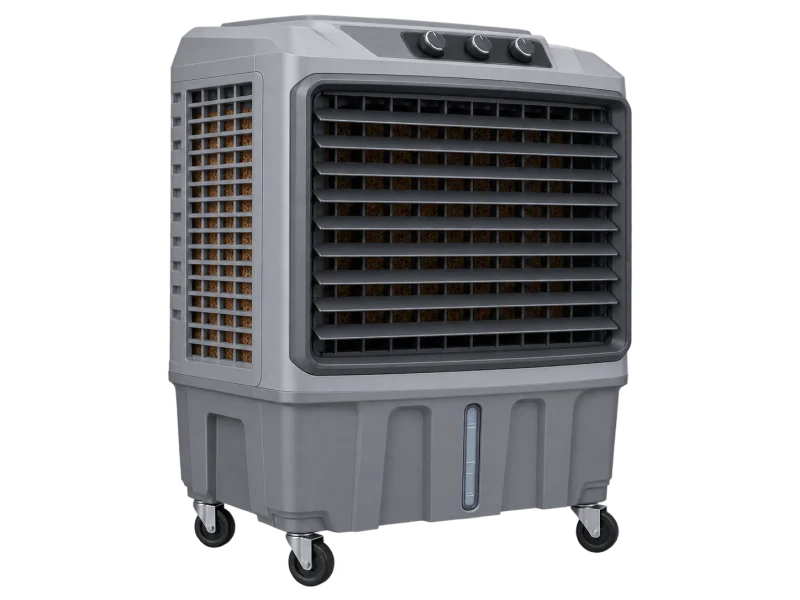 AI-generated concept
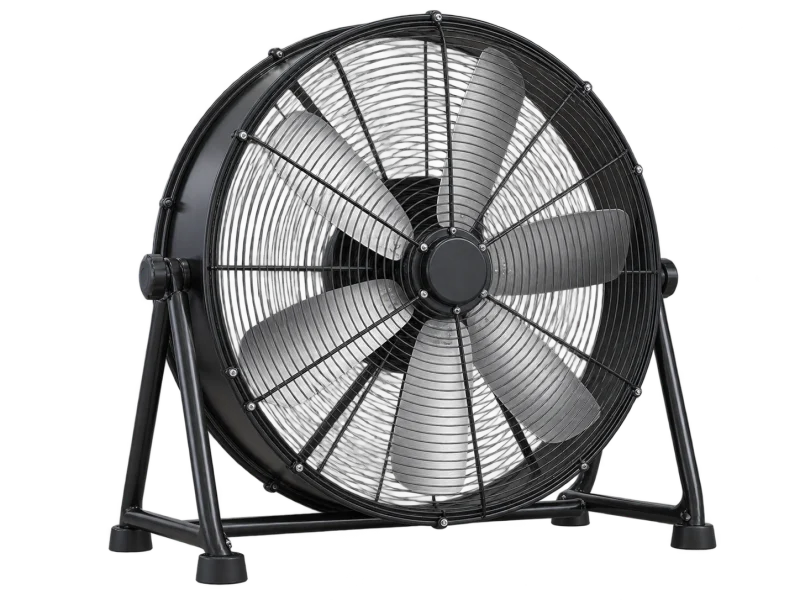 AI-generated concept
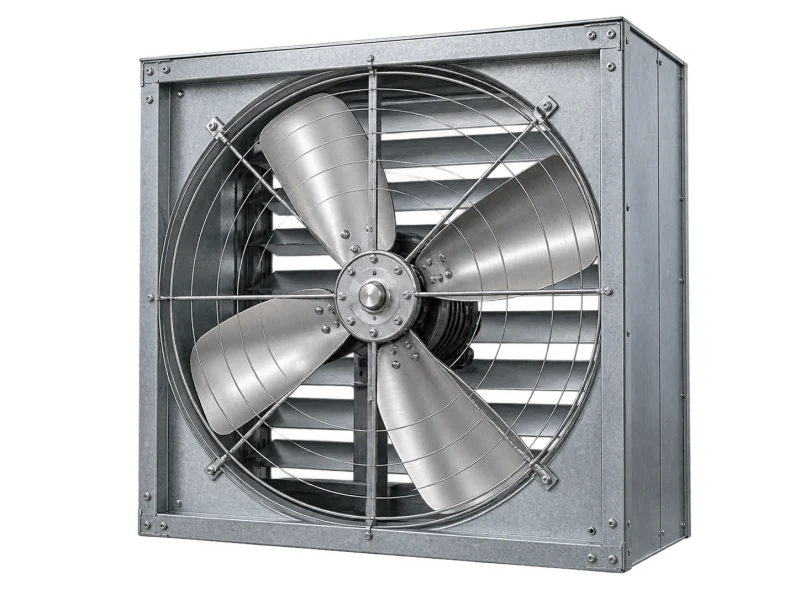 AI-generated concept
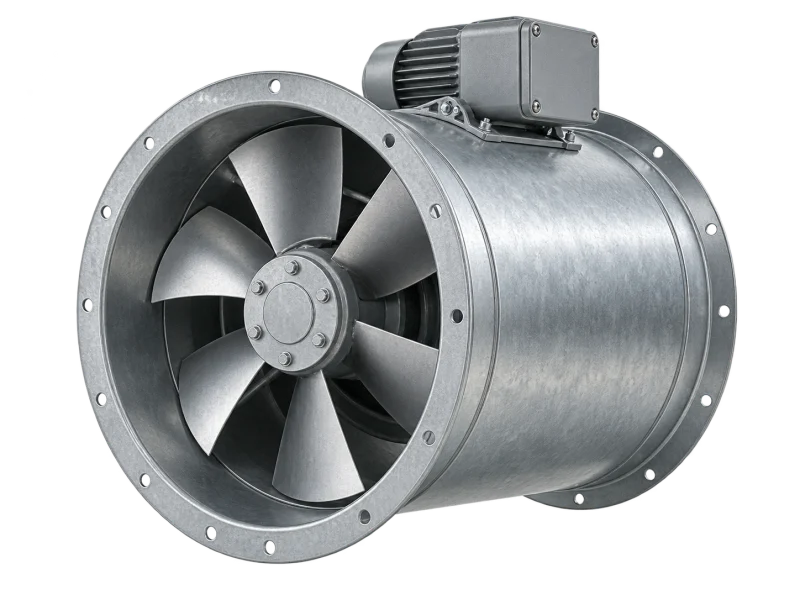 AI-generated concept
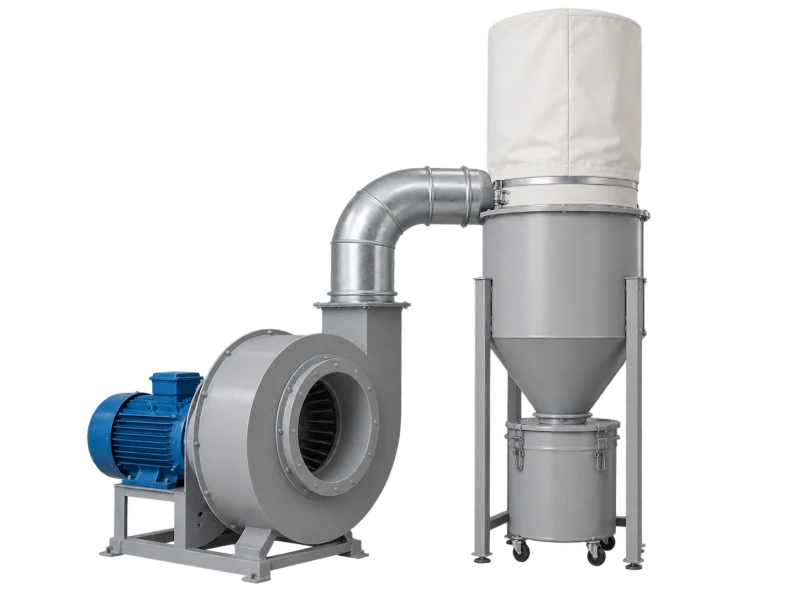 AI-generated concept
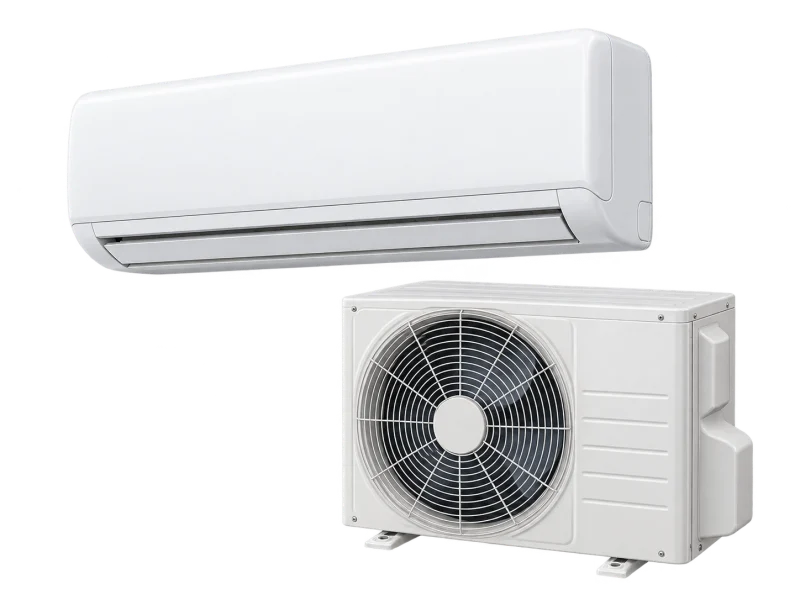 AI-generated concept
Manufacturer sources (checked 31 Oct 2026): YUSHI Big Fan — AC/DC models · YUSHI Big Fan — product range
One team from survey, design and supply to installation, testing and after-sales support.
Equipment sourced through authorized channels, with model advice and the manufacturer’s warranty terms.
Roof height and structure, floor area and obstructions are surveyed before choosing fan size and count.
Big fans, controls, power, fire-alarm interlock and evaporative or ventilation fans designed as one.
YUSHI AC or DC models chosen for area, height, noise and budget.
Every speed, vibration, mounts and the agreed shutdown tested, with manuals and a maintenance schedule.
A Pathum Thani team providing maintenance and technical support across Thailand.
The control panel sets speed for conditions and stops the fan on the building’s safety conditions.
Optional temperature sensing or schedules decide when to raise or lower speed.
AI-generated equipment concepts, not photographs of specified models.
Concept only, not an electrical or structural drawing. Mounting and safety interlocks must be reviewed by engineers.
Test every speed setting, vibration, mounts and secondary retention, the emergency stop or agreed shutdown, and hand over manuals, a maintenance schedule and the manufacturer's warranty terms.
Equipment details, compatibility and scope must be confirmed for each project.
Does a big fan cool the air like air conditioning?
It does not chill the air like an air conditioner. It moves a large volume of air down and outward, so people feel air movement, and it mixes hot air under the roof with the air below. For further temperature reduction, consider evaporative coolers or air conditioning alongside it.
Should I choose an AC or a DC motor?
YUSHI's AC models use a geared motor with blades of about 7.2–7.3 m and the largest stated coverage. The DC models have no shaft, gear or gearbox and are stated by the manufacturer to be quieter and more efficient, which suits noise-sensitive spaces. Choose by area, height, noise and budget.
The same six stages on every project, so the system is ready on handover day.
Understand your goals and requirements
Assess the site and installation conditions
Plan the right solution for your operation
Install equipment and integrate systems
Verify performance and train your team
Maintain equipment and provide technical support
Tell us about your space, the systems you need and what you want to improve.